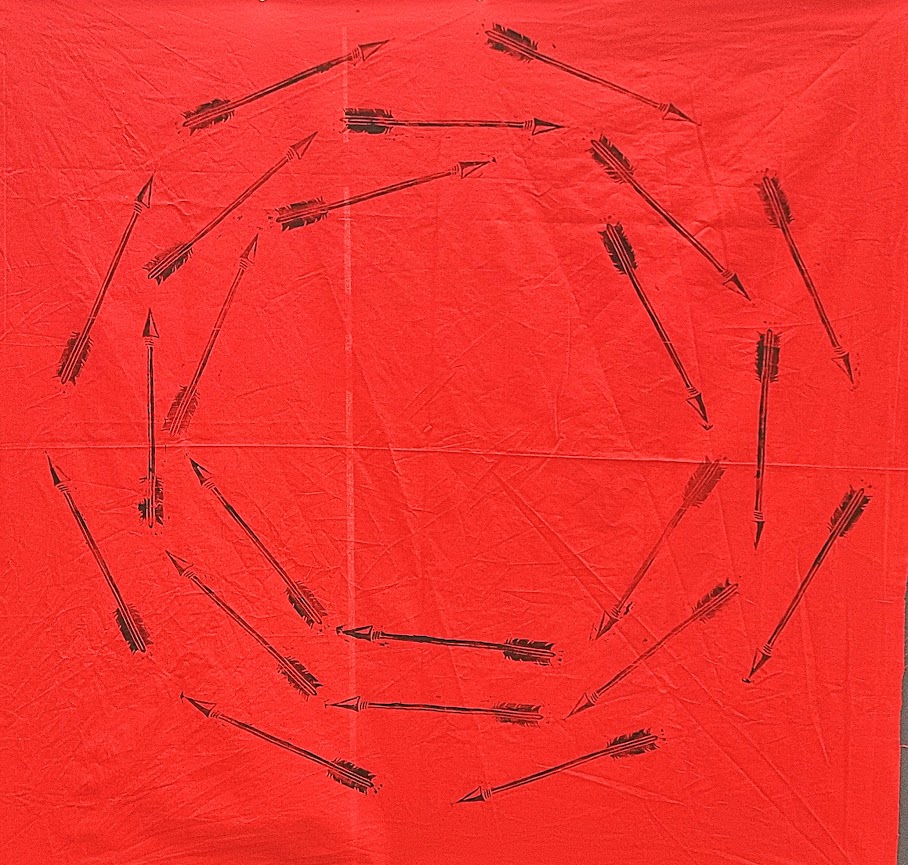
The Cycle, (2024) Lino on cotton, 150 x 150 cm.
This piece illustrates the self perpetuating nature of violence. An Ouroboros of arrows flies from Odysseus’ bow and devour themselves as he wipes out yet another generation of his own country’s youth. The previous generation of Ithaca’s young men have not returned; their bones lie unwept at the bottom of the ocean. Now, upon the sole survivors’ homecoming a second generation of youth will be slaughtered and their families forced to take revenge.

The Guilty Hero, (2024) Oil on canvas, 42 x 59 cm.
This painting depicts the moment Eurycleia first witnesses the utter devastation wreaked by Odysseus’ revenge upon the Suitors. She enters a scene choked with blood and corpses with Odysseus stooped over the carnage like a lion fresh from the kill. She reacts with surprised joy that the Suitors plaguing her household are finally dead, but Odysseus meets her triumph with rebuke; he can already feel the crushing weight of what he has done heavy on his shoulders.
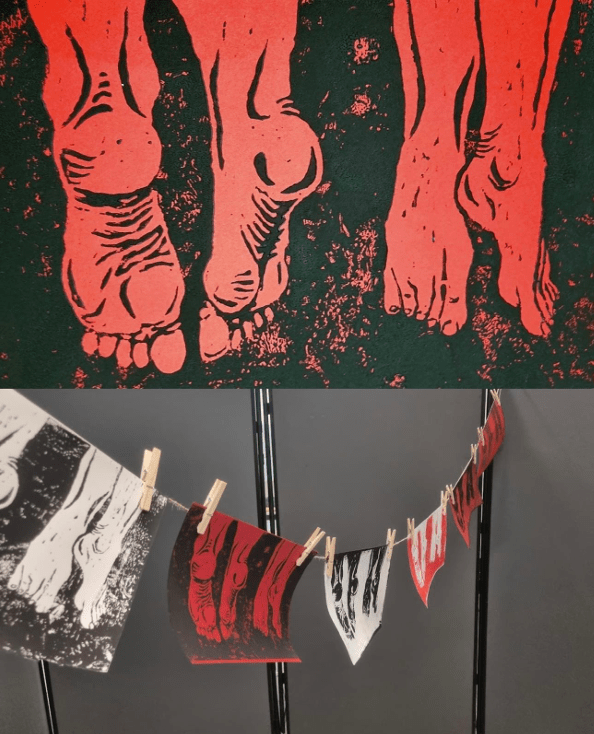
For a little while.. But not for very long, (2023) Lino on paper, pegs and string, 200 x 25 cm.
These prints depict what is, to me, the most chilling line in Homer. Odysseus’ revenge does not only target the Suitors but also extends to the palace staff with whom they are intimate. At some points in the poem this is described rape (22.37) at others as loving, consensual relationships (18. 325). The vengeful Odysseus first makes the twelve maids clear the palace of corpses and scrub the floor clean of their blood before taking them outside to be hanged. The twelve maids are left nameless, all except from Melantho of the pretty cheeks, who Penelope had raised as her own child (18.323). This was almost certainly after Odysseus had left for Troy, as he has no recollection of her; making her a teenager when she is killed. As Margret Atwood points out in her ‘Penelopiad’ these twelve slaughtered maids were “The youngest. The most beautiful” of the palace staff.

Retribution, (2024) Acrylic on Canvas, 45 x75 cm.
Perhaps unsurprisingly Odysseus’ slaughter of the Suitors does not go unnoticed for long, and soon the fathers of massacred sons rally around Eupeithes, the father of Antinous and their grief reshapes to thoughts of vengeance. Despites Halitherses’ warning that retaliation will only lead to further unnecessary bloodshed, Eupeithes proves to be the most persuasive speaker and the crowd hurry to arm themselves for a counter attack.

Deus ex Machina, (2023) Wire Frame and Clay, 25 x 7 cm.
As the wheel turns and attack breeds counter-attack it seems there will be no end to this cycle of vengeance. However, the Odyssey does not end with continuing violence but with a peaceful consolidation, neatly tying off the conflict and providing closure to its audience. Homer manages this by employing a device that will be used time and time again by later writers and composers throughout history; deus ex machina. After inciting Laertes to launch a fatal spear throw straight through Eueithes’ skull, Athena decides to assert her divine authority and bring an end to the conflict.
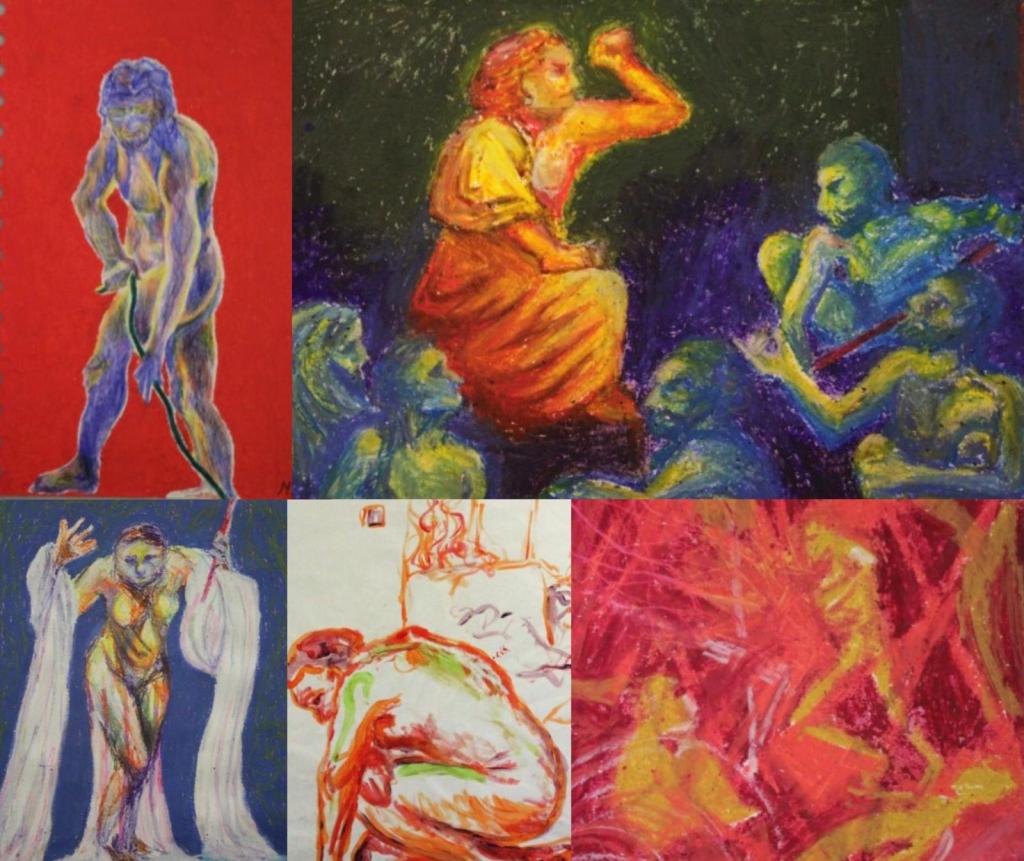
Oil Pastel sketches of Odysseus the Beggar, Conspiracy against Telemachus, Circe, Destruction of a City and Chaos in the Hall, (2023) various sizes.
 MeganGriffin.art